



Interleukin Related Inducer
-
Casein hydrolysate
 0 ImagesCat. No.: HY-126404CAS No.: 65072-00-6
Casein hydrolysate is an orally effective, multi-functional mixture of bioactive peptides, a hydrolysis product of casein (HY-125865), containing ACE inhibitors and immunomodulatory target regulators, among others. Casein hydrolysate releases short-chain bioactive peptides through enzymatic hydrolysis of casein, increasing cellular glutathione and catalase levels, enhancing ConA-induced IL-2 production, and exhibiting metal ion chelation, free radical scavenging, antibacterial, and mineral absorption-promoting effects. Casein hydrolysate lowers blood pressure by inhibiting angiotensin-converting enzyme (ACE) and reducing bradykinin degradation.
-
Ganglioside GQ1b (bovine) sodium
 0 ImagesSynonyms: Tetrasialoganglioside GQ1b sodium
Ganglioside GQ1b (Tetrasialoganglioside GQ1b) (bovine) sodium is a central and peripheral nervous system ganglioside and an immunostimulator. Ganglioside GQ1b (bovine) sodium modulates NMDA receptor signaling via ERK1/2, PKA, CREB, NR2A, NR2B, and GSK3β, and increases BDNF expression. Ganglioside GQ1b (bovine) sodium reduces Aβ pathology, tau phosphorylation, and APP levels. Ganglioside GQ1b (bovine) sodium can be used for the research of Alzheimer’s disease.
-
ATP-13C10,15N5 dilithium
 0 ImagesCat. No.: HY-150709S1Purity: 99.82%Synonyms: Adenosine 5'-triphosphate-13C10,15N5 dilithium
ATP-13C10,15N5 (Adenosine 5'-triphosphate-ATP-13C10,15N5) dilithium is the 13C10,15N5-labeled ATP (HY-B2176). ATP is a central component of energy storage and metabolism in vivo. ATP provides the metabolic energy to drive metabolic pumps and serves as a coenzyme in cells. ATP is an important endogenous signaling molecule in immunity and inflammation. ATP can activate the NLRP3 inflammasome and induce IL-1β and chemokines secretion. ATP has anti-bacterial infection effects and can protect mice against bacterial infection in mice.
-
Theophylline monohydrate
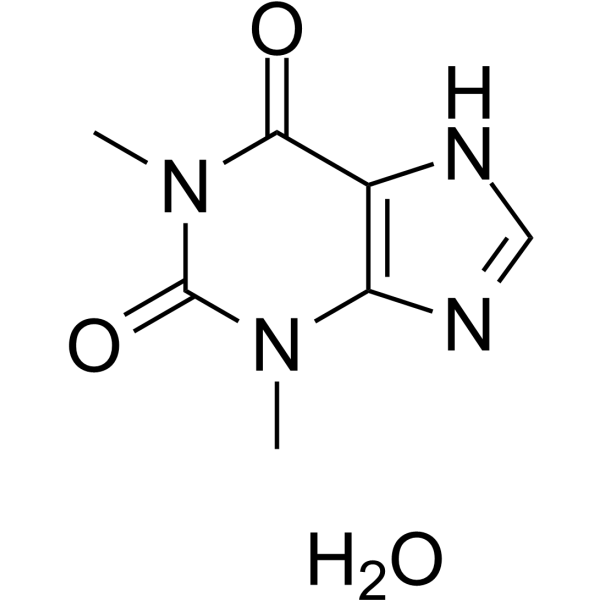 0 ImagesSynonyms: 1,3-Dimethylxanthine monohydrate; Theo-24 monohydrate
Theophylline (1,3-Dimethylxanthine) monohydrate is a potent phosphodiesterase (PDE) inhibitor, adenosine receptor antagonist, and histone deacetylase (HDAC) activator. Theophylline (1,3-Dimethylxanthine) monohydrate inhibits PDE3 activity to relax airway smooth muscle. Theophylline (1,3-Dimethylxanthine) monohydrate has anti-inflammatory activity by increase IL-10 and inhibit NF-κB into the nucleus. Theophylline (1,3-Dimethylxanthine) monohydrate induces apoptosis. Theophylline (1,3-Dimethylxanthine) monohydrate can be used for asthma and chronic obstructive pulmonary disease (COPD) research.
-
Damulin B
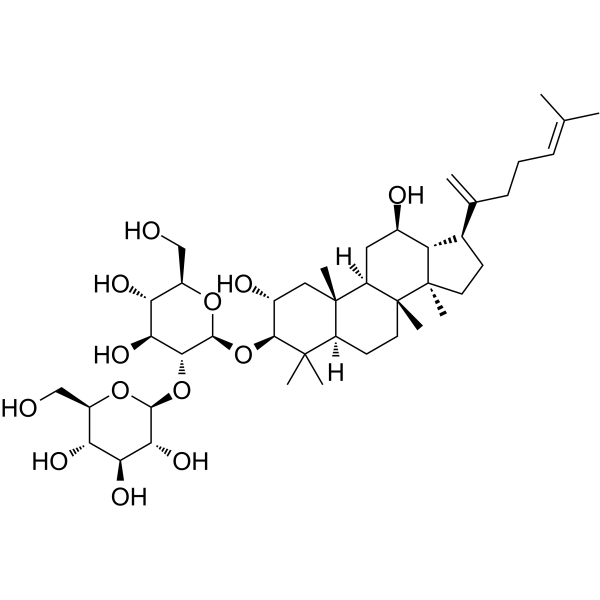 0 ImagesCat. No.: HY-16942CAS No.: 1202868-75-4
Damulin B is a dammarane-type saponin found in Gynostemma pentaphyllum. Damulin B can inhibit cancer cell apoptosis, decrease mitochondrial membrane potential, inhibit ROS production and cause G0/G1 phase arrest. Damulin B can prevent Cisplatin (HY-17394)-induced acute kidney injury and induce hair growth. Damulin B shows anti-inflammation anti-diabetic and anti-obesity effect. Damulin B can be used for the researches of cancer, inflammation, metabolic disease, such as lung cancer, osteoarthritis and diabetes.
-
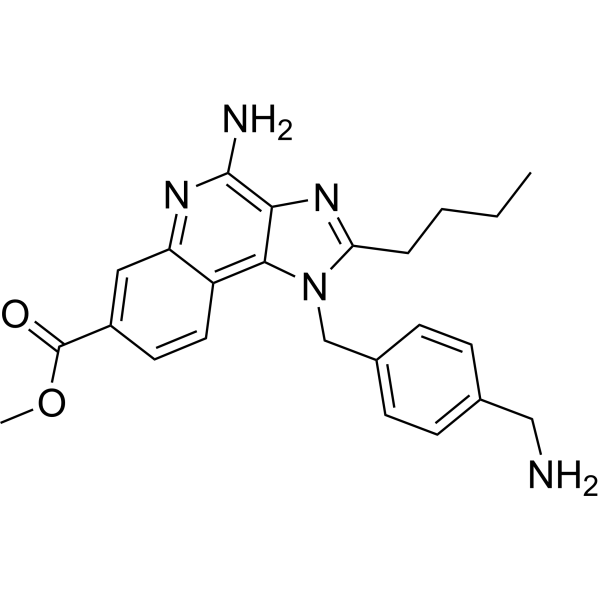
GLPG4970
 0 Images
GLPG4970 is a potent, selective and orally active salt-inducible kinase 2/3 (SIK2/SIK3) dual inhibitor with IC50 values of 0.3 nM and 0.7 nM. GLPG4970 has weak inhibition of hERG channel with an IC50 of 29 μM. GLPG4970 can decrease TNFα release and increase IL-10 release GLPG4970 can be used for the researches of inflammation and immunology, such as colitis.
-
ATP-13C2 dilithium
 0 ImagesCat. No.: HY-B2176S7Synonyms: Adenosine 5'-triphosphate-13C2 dilithium
ATP-13C2 (Adenosine 5'-triphosphate-ATP-13C2) dilithium is the 13C2-labeled ATP (HY-B2176). ATP is a central component of energy storage and metabolism in vivo. ATP provides the metabolic energy to drive metabolic pumps and serves as a coenzyme in cells. ATP is an important endogenous signaling molecule in immunity and inflammation. ATP can activate the NLRP3 inflammasome and induce IL-1β and chemokines secretion. ATP has anti-bacterial infection effects and can protect mice against bacterial infection in mice.
-
ATP-d14 dilithium
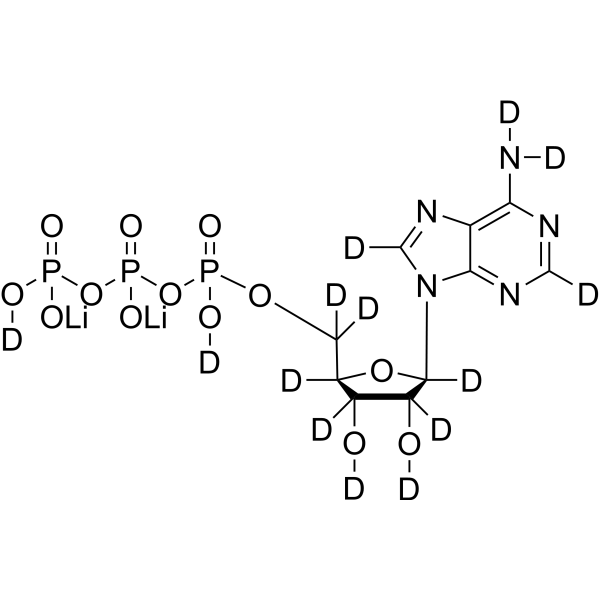 0 ImagesCat. No.: HY-B2176S4Purity: 99.98%Synonyms: Adenosine 5'-triphosphate-d14 dilithium
ATP-d14 (Adenosine 5'-triphosphate-ATP-d14) dilithium is the d14-labeled ATP (HY-B2176). ATP is a central component of energy storage and metabolism in vivo. ATP provides the metabolic energy to drive metabolic pumps and serves as a coenzyme in cells. ATP is an important endogenous signaling molecule in immunity and inflammation. ATP can activate the NLRP3 inflammasome and induce IL-1β and chemokines secretion. ATP has anti-bacterial infection effects and can protect mice against bacterial infection in mice.
-
ATP-13C10,15N5 ammonium solution (100mM)
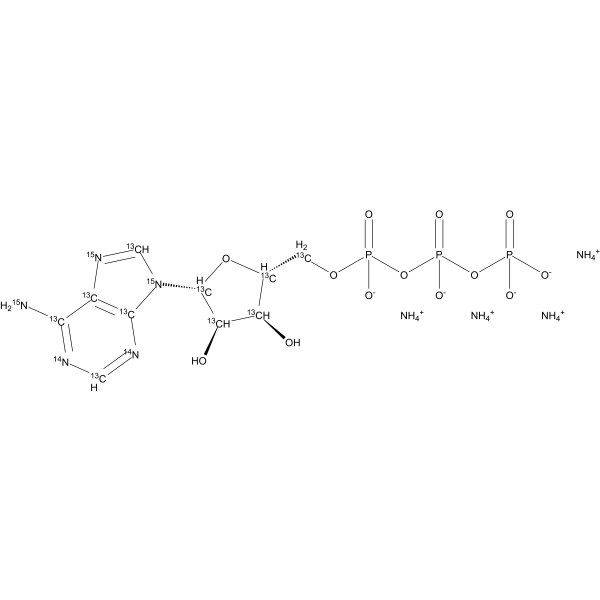 0 ImagesSynonyms: Adenosine 5'-triphosphate-13C10,15N5 ammonium solution (100mM)
ATP-13C10,15N5 (Adenosine 5'-triphosphate-ATP-13C10,15N5) ammonium solution (100 mM) is the 13C10,15N5-labeled ATP (HY-B2176). ATP is a central component of energy storage and metabolism in vivo. ATP provides the metabolic energy to drive metabolic pumps and serves as a coenzyme in cells. ATP is an important endogenous signaling molecule in immunity and inflammation. ATP can activate the NLRP3 inflammasome and induce IL-1β and chemokines secretion. ATP has anti-bacterial infection effects and can protect mice against bacterial infection in mice.
-
ATP-15N5,d14 dilithium
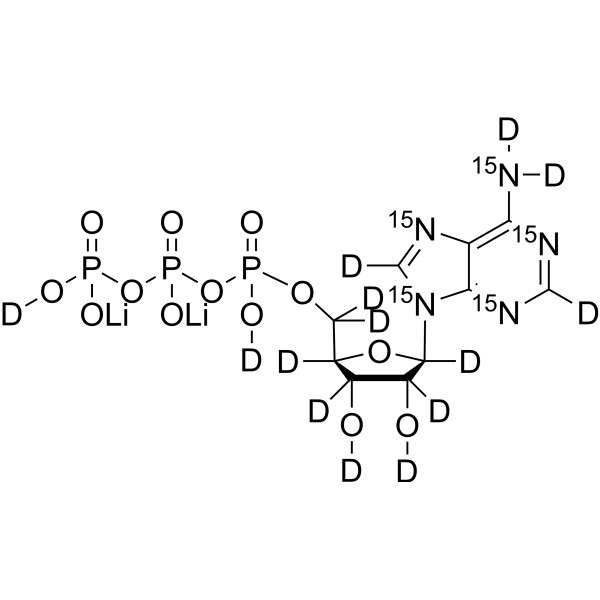 0 ImagesCat. No.: HY-B2176S3Purity: 98%Synonyms: Adenosine 5'-triphosphate-15N5,d14 dilithium
ATP-15N5,d14 (Adenosine 5'-triphosphate-ATP-15N5,d14) dilithium is the 15N5,d14-labeled ATP (HY-B2176). ATP is a central component of energy storage and metabolism in vivo. ATP provides the metabolic energy to drive metabolic pumps and serves as a coenzyme in cells. ATP is an important endogenous signaling molecule in immunity and inflammation. ATP can activate the NLRP3 inflammasome and induce IL-1β and chemokines secretion. ATP has anti-bacterial infection effects and can protect mice against bacterial infection in mice.
-
1Z105
 0 Images
1Z105 is an orally active TLR4/MD2 agonist, immunostimulant and vaccine adjuvant. 1Z105 activates NF-κB via the MyD88/TRIF pathway in a CD14-independent manner, with EC50 values of 0.63 µM and 0.77 µM for inducing IL-6 and IL-12 in mBMDCs, respectively. 1Z105 promotes dendritic cell maturation, antigen uptake and cross-presentation; when used alone, it induces Th2-IgG1, while combined with the TLR7 agonist 1V270, it synergistically induces balanced Th1/Th2 responses and provides low-reactogenic protection against homologous, heterologous and heterosubtypic influenza. 1Z105 prevents LPS (HY-D1056A1)- and galactosamine-induced liver injury as well as autoantibody-driven arthritis in mice. 1Z105 can be used in studies related to influenza virus infection, inflammation, and LPS/galactosamine-induced liver injury.

-
a15:0-i15:0 PE
 0 ImagesCat. No.: HY-N15936CAS No.: 2936622-21-6
a15:0-i15:0 PE is an atypical TLR2 agonist, and its immune signaling strictly depends on the TLR2-TLR1 heterodimer. a15:0-i15:0 PE induces dendritic cells to produce TNFα and IL-6, but does not induce the production of IL-10 or IL-12p70. At low doses, a15:0-i15:0 PE resets the activation threshold of immune cells to suppress or regulate immune responses against specific agonists.
-
Convulxin
 0 ImagesCat. No.: HY-117123CAS No.: 37206-04-5
Convulxin is a toxin found in a tropical rattlesnake. Convulxin stimulates platelet aggregation, and clusters GPVI to trigger Src family kinase activation, Fc receptor γ chain phosphorylation, and p72SYK signaling. Convulxin interacts with Dectin-2 to induce IL-10 production, activates monocytes to generate ROS and NLRP3 inflammasome-mediated IL-1β secretion, and induces mitochondrial ROS. Convulxin causes transient arterial blood pressure changes in dogs. Convulxin can be used for research related to coagulation.
-
Theophylline (sodium glycinate)
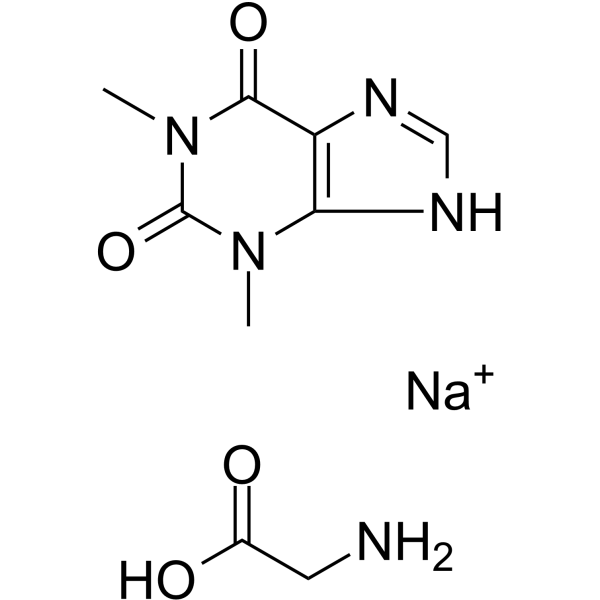 0 ImagesSynonyms: 1,3-Dimethylxanthine (sodium glycinate); Theo-24 (sodium glycinate)
Theophylline (1,3-Dimethylxanthine) sodium glycinate is a potent phosphodiesterase (PDE) inhibitor, adenosine receptor antagonist, and histone deacetylase (HDAC) activator. Theophylline sodium glycinate inhibits PDE3 activity to relax airway smooth muscle. Theophylline sodium glycinate has anti-inflammatory activity by increase IL-10 and inhibit NF-κB into the nucleus. Theophylline sodium glycinate induces apoptosis. Theophylline sodium glycinate can be used for asthma and chronic obstructive pulmonary disease (COPD) research.
-
SMU-C409
 0 ImagesCat. No.: HY-180580CAS No.: 3113739-61-7
SMU-C409 is a TLR1/2 agonist with an EC50 of 65 nM in HEK-Blue hTLR2 Cells. SMU-C409 activates the TLR1/2–MyD88–NF-κB pathway, inducing TNF-α/IL-1β secretion and robust immune cell activation for antitumor immunomodulation. SMU-C409 shows low toxicity in virto. SMU-C409 can be used for cancer immunotherapy research.

-
Theophylline L-lysine
 0 ImagesCat. No.: HY-130054CAS No.: 83920-54-1Synonyms: Lysine theophyllinate
Theophylline L-lysine (Lysine theophyllinate) is a soluble derivative of Theophylline (HY-B0809). Theophylline L-lysine is a potent phosphodiesterase (PDE) inhibitor, adenosine receptor antagonist, and histone deacetylase (HDAC) activator. Theophylline L-lysine inhibits PDE3 activity to relax airway smooth muscle. Theophylline L-lysine has anti-inflammatory activity by increasing IL-10 and inhibiting NF-κB into the nucleus. Theophylline L-lysine induces apoptosis. Theophylline L-lysine can be used for asthma and chronic obstructive pulmonary disease (COPD) research.
-
GL-4512
 0 ImagesCat. No.: HY-189068CAS No.: 1240895-94-6
GL-4512 is an orally active LILRB4/ILT3 inhibitor with an IC50 of 37 nM against human targets, and human Kd values of 18.1 nM and 39.2 nM, respectively. GL-4512 directly binds to the extracellular pockets of LILRB4/ILT3 that accommodate their ligands, blocks the LILRB4-SCG2 signaling pathway, and inhibits the downstream SHP1/SHP2 and STAT3 signaling pathways. GL-4512 restores anti-tumor immune activity, promotes the production of IFN-γ and IL-2, enhances the activation of cytotoxic T cells, reduces tumor cell viability, inhibits tumor growth, and strengthens intratumoral immune activation. GL-4512 can be used in research related to colorectal cancer and acute myeloid leukemia.



